Crews will blow smoke into West Central Springfield sewers the week of Nov. 30
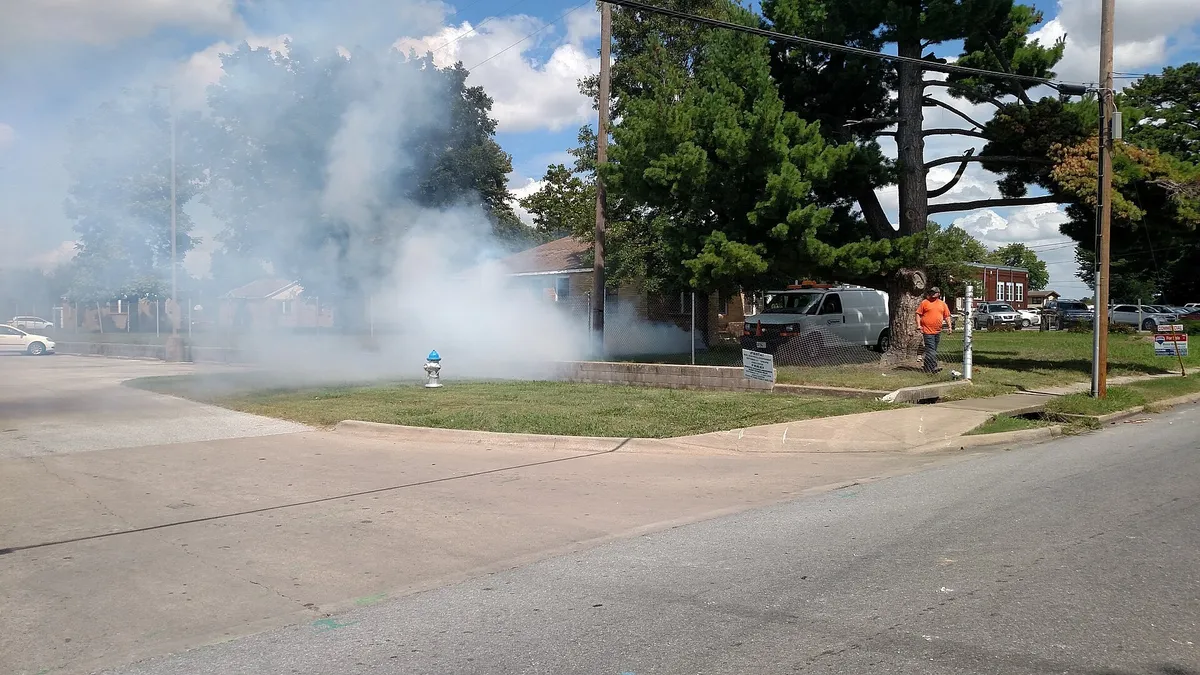
Smoke may rise from yards and gutters in part of Springfield's West Central neighborhood the week of Nov. 30, when city crews and a contractor test the sanitary sewer lines for leaks.
Springfield Environmental Services and contractor Trekk will do the work, the city said in its announcement of the testing. It should take about two days, weather permitting. The test zone runs roughly from Missouri Avenue west to Kansas Expressway and from Grand Street north to State Street, lines that follow a stormwater basin draining into Jordan Creek.
Households there should find doorhangers on their front doors 48 hours before crews arrive, each listing a phone number for the field technician.
"You do not need to be home when the smoke testing is performed," the city said.
Crews blow smoke into manholes. It escapes wherever pipes are broken or where downspouts, area drains or foundation drains tie into the sewer. Workers then walk each property, watching yards and gutters for smoke and noting spots that may be defects.
In its announcement, the city said the smoke "is non-toxic and does not create a fire hazard."
Smoke can occasionally drift into a home or business through floor, shower or sink drains that see little use. To keep it out, the city offered simple advice: "Pour 24 ounces of water into all drains a few days prior to the test." Residents who find smoke indoors should call the testing crew working nearby.
Outdoors, smoke rising from a particular lot can point to trouble on that property. "This could mean that you have improper connections or broken pipes on your property," the city said, asking owners who see it to contact the crew.
Crew members wear uniforms, carry identification badges and drive clearly marked vehicles. Drivers will see flashing message signs along major roads while a test is underway.
Testing days and locations go to 911 dispatchers, police and firefighters, and a representative of the Fire Department will accompany the crews. Senior Communication Coordinator Kristen Milam is the city's contact for more information.
The work is part of Springfield's $300 million Supplemental Overflow Control Plan, which aims to cut sanitary sewer overflows over the next 15 years. State regulators at the Missouri Department of Natural Resources approved the city's original plan in 2015 and the supplemental plan in 2021.